| Drug Class: |
Synthetic pentadecapeptide research compound (gastric-derived healing peptide) |
| Molecular Formula: |
C62H98N16O22 |
| Molecular Weight: |
~1419.6 Da |
| Form: |
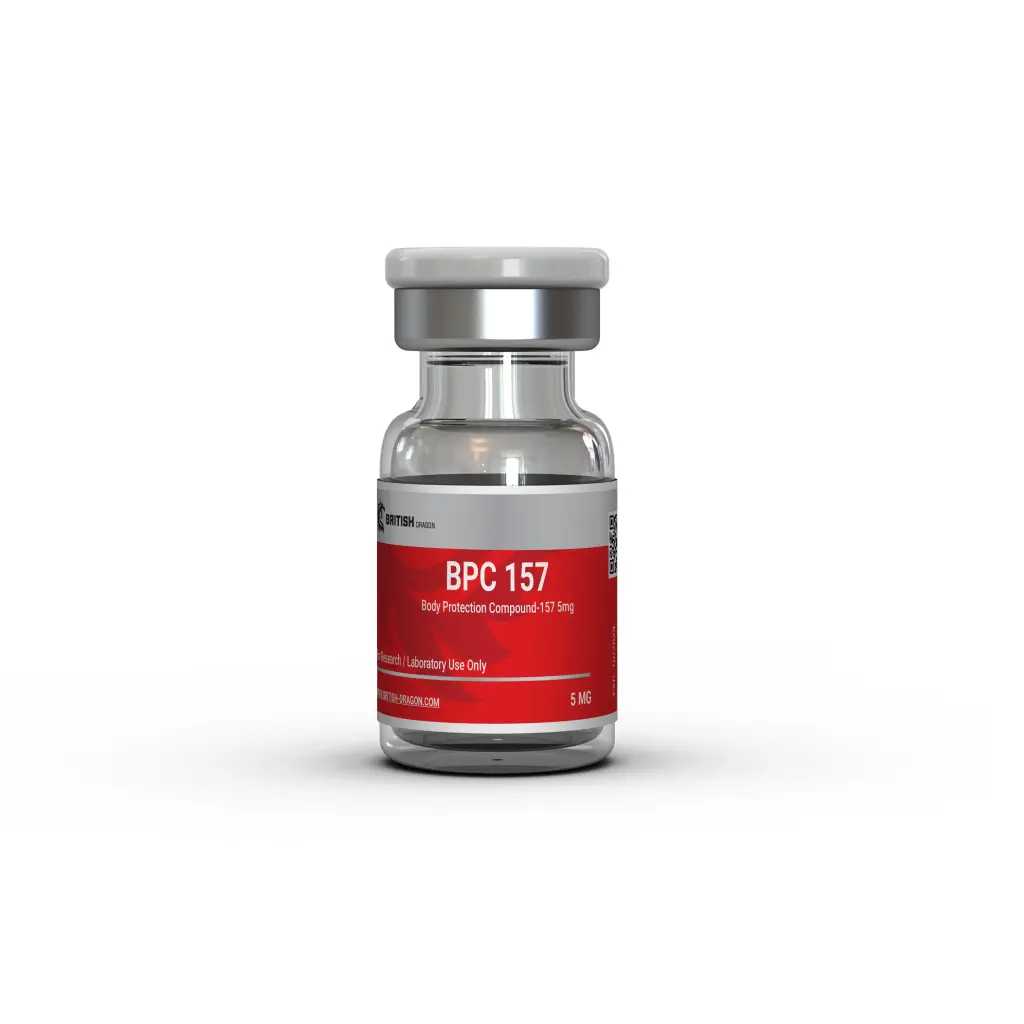
Lyophilized peptide powder for injection (vial) |
| Purity: |
Typically ≥98% (HPLC, research-grade peptide synthesis) |
| Sequence: |
Gly-Glu-Pro-Pro-Pro-Gly-Lys-Pro-Ala-Asp-Asp-Ala-Gly-Leu-Val (15 amino acid sequence) |
| Brand: |
British Dragon Pharma |
| Substances: |
BPC-157 (Body Protective Compound-157) |
| Concentration: |
5mg |
Product Disclaimer: Research Purposes Only
This product is intended strictly for laboratory research and analytical use only. It is not approved for human or veterinary administration. Any use outside controlled laboratory research settings is prohibited. The material is supplied exclusively for scientific investigation and must be handled by qualified professionals in accordance with applicable regulations.
BPC-157 5mg – Gastropeptide Research Compound by British Dragon Pharma
Introduction and Overview
BPC-157 (Body Protection Compound-157) is a synthetic peptide fragment derived from a partial sequence of a gastric protein. In laboratory and preclinical research settings, it is investigated for its role in cellular signaling, angiogenic pathway modulation, and extracellular matrix communication systems.
Within experimental biology, BPC-157 is commonly used as a model compound for studying peptide-mediated interactions in gastrointestinal-derived signaling networks, as well as broader systemic communication between extracellular matrix components and intracellular regulatory pathways.
This compound is strictly intended for research purposes only and is not approved for human consumption, medical use, or diagnostic application.
Biological Relevance
Peptide Signaling and Cellular Communication
BPC-157 is examined in research models for its interaction with cell signaling pathways involved in tissue communication and regulatory feedback systems. These studies focus on how peptide fragments may influence intracellular messaging networks under controlled laboratory conditions.
Key signaling pathways analyzed in experimental contexts include:
- FAK (Focal Adhesion Kinase) signaling – involved in cellular adhesion and structural communication
- MAPK/ERK pathways – associated with intracellular signaling cascades
- NO (nitric oxide) signaling systems – related to vascular communication pathways
- Wnt/β-catenin signaling – involved in cellular regulation and gene expression
Gastrointestinal-Derived Peptide Research
As a peptide originally derived from gastric protein fragments, BPC-157 is studied in relation to gastrointestinal signaling systems and their broader influence on systemic biochemical communication networks. Researchers explore how gut-derived peptides interact with cellular regulatory pathways across multiple tissues.
This research intersects with inflammation research and regeneration research.
Extracellular Matrix and Vascular Signaling Models
BPC-157 is frequently analyzed in models focusing on extracellular matrix interactions, vascular signaling systems, and endothelial cell communication pathways. These studies examine peptide influence on structural protein networks and intercellular signaling dynamics.
This area is closely related to cardiovascular research and musculoskeletal research.
Research Applications and Experimental Investigation
Cellular Migration and Adhesion Models
Laboratory research involving BPC-157 often includes assays that evaluate cellular migration, adhesion molecule signaling, and cytoskeletal regulation in controlled in vitro systems.
Angiogenic Signaling Pathway Studies
Experimental models assess peptide involvement in vascular signaling networks, including endothelial communication pathways and nitric oxide-mediated regulatory systems.
Extracellular Matrix Remodeling Research
BPC-157 is used in studies investigating extracellular matrix protein interactions, collagen signaling systems, and tissue structural communication networks.
Internal and External Research Connections
BPC-157-related studies intersect with multiple biomedical fields. In regeneration research, extracellular matrix signaling and cellular repair models are evaluated under controlled laboratory conditions. In inflammation research, peptide-mediated modulation of cytokine signaling networks is investigated.
Additional overlap exists with immune support research, which examines peptide interactions with immune signaling pathways, and neurocognitive research, where gut-brain axis communication systems are studied in experimental models.
Researchers typically reference peer-reviewed literature through PubMed, the NCBI database, and institutional publications from the National Institutes of Health.
Product Information
Compound Details
- Product Title: BPC 157
- Active Substance: BPC 157
- Concentration: 5mg
- Pack Size: Vial
- Manufacturer: British Dragon Pharma
Compliance and Disclaimer
BPC-157 is strictly intended for laboratory and preclinical research purposes only. It is not approved for human consumption, therapeutic use, or diagnostic application by regulatory authorities including the U.S. Food and Drug Administration.
No claims regarding safety, efficacy, or physiological outcomes are made or implied. All handling of peptide compounds must comply with institutional biosafety standards and applicable regulatory frameworks governing research substances.
Frequently Asked Questions
What is BPC-157?
BPC-157 is a synthetic peptide fragment studied in laboratory environments for its role in cellular signaling, extracellular matrix communication, and gastrointestinal-derived peptide research models.
Which pathways are commonly studied with BPC-157?
Research focuses on FAK signaling, MAPK/ERK cascades, nitric oxide signaling, Wnt/β-catenin pathways, and extracellular matrix regulatory systems.
Is BPC-157 approved for human use?
No. BPC-157 referenced here is strictly for research purposes only and is not approved for therapeutic or clinical applications.
Which scientific fields study gastrointestinal peptides?
Relevant disciplines include inflammation research, regeneration research, cardiovascular research, and musculoskeletal research.
Where can scientific literature on peptide signaling be found?
Peer-reviewed resources are available through PubMed, NCBI, and institutional publications from the NIH.
References
PubMed – BPC-157 and Peptide Signaling Research
NCBI – Extracellular Matrix and Cellular Communication
NCBI – Cellular Signal Transduction Pathways
NIH – Biomedical Research and Molecular Signaling Resources
FDA – Regulatory Guidance for Laboratory Compounds
WHO – Biomedical Laboratory Standards and Research Guidance
BPC-157 – FAQ
✔️ What is BPC-157?
BPC-157 is a synthetic peptide derived from a protective gastric protein, studied for its role in tissue repair, healing acceleration, and inflammation modulation.
✔️ How does BPC-157 work?
It is believed to enhance angiogenesis (formation of new blood vessels) and support cellular regeneration and repair signaling pathways.
✔️ What are the main research effects of BPC-157?
Commonly studied effects include faster recovery from injuries, improved tendon and ligament repair, reduced inflammation, and enhanced tissue healing.
✔️ Can BPC-157 support injury recovery?
Research suggests it may promote soft tissue healing, including muscles, tendons, ligaments, and connective tissue regeneration.
✔️ How should BPC-157 be stored?
Store the BPC-157 vial in a refrigerator at 2–8°C (36–46°F) and protect it from heat, light, and moisture to maintain peptide stability and potency.
✔️ What happens after reconstitution?
After mixing with sterile bacteriostatic water, it should be refrigerated and used within the recommended timeframe to preserve effectiveness and purity.
✔️ Is BPC-157 safe?
BPC-157 is a research peptide with limited human clinical data, and should be used only in a controlled research environment.
✔️ Can BPC-157 help with gut health research?
Yes, studies suggest it may support gastric lining protection, intestinal repair, and inflammation balance in the digestive system.
✔️ Does BPC-157 reduce inflammation?
It may help regulate inflammatory responses, potentially supporting reduced swelling and improved healing environments.
✔️ Are there side effects of BPC-157?
Reported effects are generally mild and may include temporary fatigue, mild injection site irritation, or slight digestive changes.
✔️ How is BPC-157 typically administered?
It is commonly used via subcutaneous injection, depending on research protocol and intended study focus.
✔️ Where can I buy authentic BPC-157?
Always source from trusted suppliers such as verified peptide vendors or reputable research chemical distributors to ensure authenticity, purity, and quality control.
BPC-157 – Storage and Safety
The correct storage and handling of BPC-157 is essential to preserve its peptide stability, biological activity, and regenerative potential. As a highly sensitive synthetic peptide, BPC-157 requires controlled environmental conditions to maintain its structural integrity and ensure consistent performance reliability.
Optimal Storage Conditions
To maintain maximum effectiveness, BPC-157 vials must always be stored in a refrigerated environment between 2°C and 8°C (36°F–46°F). Stable cold storage helps protect the amino acid chain structure, preventing degradation caused by heat exposure, light, or temperature fluctuations.
The vial should remain in its original sealed container and be protected from direct sunlight, humidity, and oxygen exposure. Environmental instability can reduce the effectiveness of regenerative peptides, leading to diminished biological activity. Freezing is strictly prohibited, as it can permanently damage the molecular structure of BPC-157 peptide compounds.
Safe Handling Practices
When working with BPC-157, strict sterile technique is required to ensure product safety and prevent contamination. Only sterile syringes and properly disinfected preparation tools should be used during reconstitution and administration.
The rubber stopper should always be disinfected before each use, and contact with non-sterile surfaces must be avoided. The vial should not be shaken aggressively, as excessive mechanical force may compromise the stability of the BPC-157 peptide solution.
Post-Reconstitution Stability
Once reconstituted, BPC-157 solution becomes more sensitive and must be continuously refrigerated. Maintaining a stable cold environment is critical to preserve peptide potency and tissue-repair activity. The solution should always be used within the recommended timeframe to ensure optimal effectiveness.
Any visible changes such as cloudiness, discoloration, or particulate formation may indicate degradation, and the product should not be used. Proper adherence to storage timelines ensures consistent recovery and regeneration support performance.
Safety and Responsibility Notes
BPC-157 peptides should always be stored securely and kept out of reach of children or unauthorized individuals. Responsible handling is essential to preserve product integrity and prevent misuse.
Following correct BPC-157 storage protocols ensures long-term stability, maintains peptide quality, and supports consistent outcomes for users incorporating it into structured recovery, rehabilitation, or performance-focused routines.