| Drug Class: |
Mitochondria-derived peptide (MDP) research compound |
| Molecular Formula: |
C101H152N28O22S2 |
| Molecular Weight: |
~2174.6 g/mol |
| Form: |
Lyophilized peptide (vial) |
| Purity: |
Not specified (typically ≥98% peptide purity for research-grade synthesis) |
| Sequence: |
MRWQEMGYIFYPRKLR (16-amino-acid mitochondrial-derived peptide) |
| Brand: |
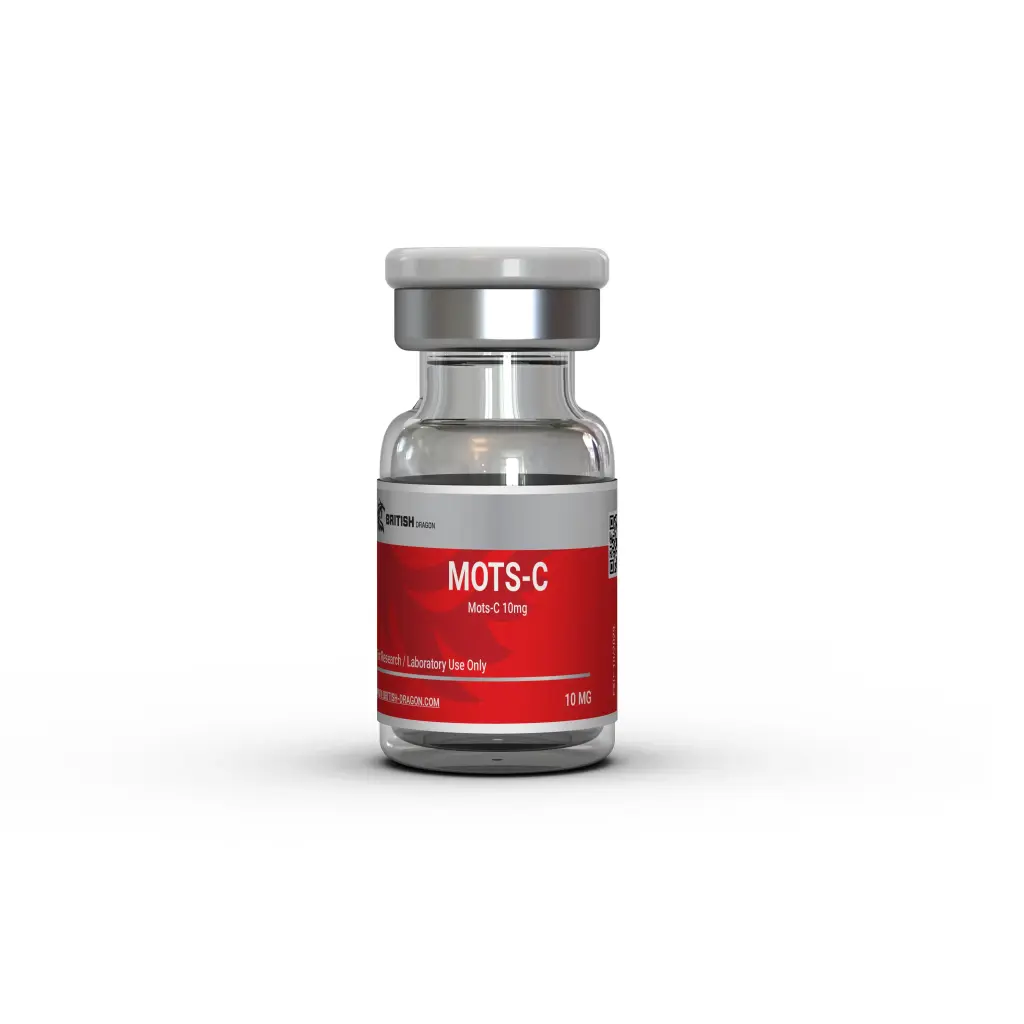
British Dragon Pharmaceuticals |
| Substances: |
MOTS-c (Mitochondrial Open Reading Frame of the 12S rRNA-c) |
| Concentration: |
10mg |
Product Disclaimer: Research Purposes Only
This product is intended strictly for laboratory research and in vitro analysis. It is not approved for human or animal use. Any form of internal administration is prohibited by law. Handling should be limited to qualified and licensed professionals. This item is not classified as a pharmaceutical, dietary supplement, or cosmetic product. For educational and scientific research use only.
MOTS-c 10mg – Mitochondrial-Derived Peptide Research Compound by British Dragon Pharma
Introduction and Overview
MOTS-c is a mitochondria-encoded peptide derived from mitochondrial 12S rRNA open reading frame sequences. In laboratory and preclinical research, it is studied as part of the expanding field of mitochondrial signaling peptides involved in intracellular energy regulation and nuclear–mitochondrial communication.
Research involving MOTS-c focuses on its role in metabolic signaling networks, cellular stress adaptation pathways, and gene expression regulation under controlled experimental conditions. It is commonly used as a model compound for investigating how mitochondria communicate with the nucleus to regulate cellular homeostasis.
MOTS-c is strictly intended for research purposes only and is not approved for human consumption, therapeutic use, or diagnostic application.
Biological Relevance
Mitochondrial-Nuclear Communication Pathways
MOTS-c is studied for its involvement in retrograde signaling, a process in which mitochondria transmit biochemical signals to the nucleus to regulate gene expression and metabolic adaptation.
- Mitochondrial stress signaling pathways
- Nuclear transcriptional regulation responses
- AMPK activation and energy-sensing mechanisms
- Cellular adaptation to metabolic stress
Energy Homeostasis and Metabolic Regulation
Experimental models examine MOTS-c in the context of cellular energy balance and metabolic control systems. Key pathways include:
- AMPK signaling pathways – central regulator of cellular energy status
- mTOR signaling modulation – nutrient-sensing and growth regulation network
- Insulin signaling pathway interactions – cellular glucose uptake regulation systems
- Oxidative phosphorylation regulation – mitochondrial ATP production processes
Cellular Stress Response Systems
MOTS-c is frequently investigated in models of oxidative and metabolic stress. Research focuses on how mitochondrial peptides influence stress-response gene expression and cellular adaptation mechanisms.
This area intersects with longevity research and metabolic research.
Research Applications and Experimental Investigation
Mitochondrial Signaling Pathway Studies
MOTS-c is used in laboratory models to evaluate mitochondrial signaling outputs and their effects on nuclear gene expression and metabolic regulation.
Metabolic Stress Adaptation Research
Experimental systems examine how cells respond to nutrient deprivation, oxidative stress, and energy imbalance in the presence of mitochondrial-derived peptides.
Gene Expression and Transcriptional Control
Research explores transcriptional regulation mechanisms influenced by mitochondrial signaling peptides, particularly genes involved in metabolism and stress response.
Internal and External Research Connections
MOTS-c-related studies intersect with multiple biomedical disciplines. In endocrine research, metabolic signaling pathways are analyzed in hormonal regulation systems. In cardiovascular research, mitochondrial function is studied in vascular energy metabolism models.
Additional overlap exists with inflammation research, where cellular stress signaling and cytokine regulation pathways are examined, and neurocognitive research, which investigates mitochondrial function in neural energy systems.
Scientific literature is commonly accessed via PubMed, the NCBI database, and institutional resources from the National Institutes of Health.
Product Information
Compound Details
- Product Title: MOTS-c
- Active Substance: MOTS-c
- Concentration: 10mg
- Pack Size: Vial
- Manufacturer: British Dragon Pharma
Compliance and Disclaimer
MOTS-c is strictly intended for laboratory and preclinical research purposes only. It is not approved for human consumption, medical use, or diagnostic application by regulatory authorities including the U.S. Food and Drug Administration.
No claims regarding safety, efficacy, or physiological outcomes are made or implied. All research involving mitochondrial peptides must follow institutional biosafety standards and applicable regulatory frameworks governing laboratory research substances.
Frequently Asked Questions
What is MOTS-c?
MOTS-c is a mitochondrial-derived peptide studied in laboratory settings for its role in cellular energy regulation and mitochondrial-nuclear communication pathways.
Which pathways are commonly studied with MOTS-c?
Research focuses on AMPK signaling, mTOR pathways, mitochondrial retrograde signaling, oxidative phosphorylation regulation, and metabolic stress response systems.
Is MOTS-c approved for human use?
No. MOTS-c referenced here is strictly for research purposes only and is not approved for therapeutic or clinical applications.
Which scientific fields study mitochondrial peptides?
Relevant disciplines include metabolic research, longevity research, neurocognitive research, and cardiovascular research.
Where can scientific literature on mitochondrial signaling be found?
Peer-reviewed resources are available via PubMed, NCBI, and institutional publications from the NIH.
References
PubMed – MOTS-c and Mitochondrial Peptide Research
NCBI – Mitochondrial Biology and Cellular Energy Systems
NCBI – Signal Transduction and Cellular Regulation
NIH – Mitochondrial Research and Metabolic Biology
FDA – Laboratory Research Guidelines
WHO – Biomedical Research Standards and Safety Frameworks
MOTS-c – FAQ
✔️ What is MOTS-c?
MOTS-c is a mitochondrial-derived peptide involved in regulating cellular energy metabolism, endurance, and metabolic adaptation.
✔️ How does MOTS-c work?
It acts at the mitochondrial level to improve energy efficiency, enhancing how cells utilize glucose and fatty acids for fuel production.
✔️ What are the main research effects of MOTS-c?
Commonly studied effects include increased endurance, improved metabolic flexibility, enhanced fat utilization, and better insulin sensitivity.
✔️ Why is MOTS-c linked to energy metabolism?
Because it originates from mitochondrial DNA, it plays a key role in energy homeostasis and cellular stress adaptation.
✔️ How should MOTS-c be stored?
Store the MOTS-c vial in a refrigerator at 2–8°C (36–46°F) and protect it from heat, light, and moisture to maintain stability and potency.
✔️ What happens after reconstitution?
After mixing with sterile bacteriostatic water, it should be refrigerated and used within the recommended timeframe to preserve effectiveness.
✔️ Is MOTS-c used in performance research?
Yes, it is widely studied for its potential role in physical endurance, metabolic efficiency, and adaptation to energy stress.
✔️ Can MOTS-c support fat metabolism?
Research suggests it may enhance fat oxidation and glucose utilization, improving overall energy balance and metabolic function.
✔️ Does MOTS-c affect exercise performance?
It may improve cellular energy output, which can support endurance and resistance to fatigue in research models.
✔️ Are there side effects of MOTS-c?
Reported effects may include mild fatigue, temporary injection site irritation, or subtle metabolic adjustments.
✔️ How is MOTS-c typically administered?
It is commonly used via subcutaneous injection depending on research protocols and study design.
✔️ Where can I buy authentic MOTS-c?
Always source from trusted suppliers such as verified peptide vendors or reputable research chemical distributors to ensure purity, authenticity, and quality control.
MOTS-c – Storage and Safety
The proper storage and handling of MOTS-c is essential to preserve its mitochondrial signaling activity, peptide stability, and metabolic regulatory function. As a specialized mitochondrial-derived peptide, MOTS-c is highly sensitive to environmental conditions and requires strict storage control to maintain full biological integrity.
Optimal Storage Conditions
To ensure maximum potency, MOTS-c vials must always be stored in a refrigerated environment between 2°C and 8°C (36°F–46°F). Consistent cold storage helps maintain the integrity of the mitochondrial peptide sequence, preventing degradation caused by heat exposure, light, or temperature instability.
The vial should remain in its original sealed container, protected from direct sunlight, humidity, and oxygen exposure. Environmental instability can reduce the effectiveness of metabolic and mitochondrial-support peptides, leading to decreased biological performance. Freezing is strictly prohibited, as it can permanently damage the molecular structure of MOTS-c peptide compounds.
Safe Handling Practices
When working with MOTS-c, strict sterile technique must always be followed to prevent contamination and preserve product quality. Only sterile syringes and properly disinfected preparation tools should be used during reconstitution and administration.
The rubber stopper should always be sanitized before each use, and contact with non-sterile surfaces must be avoided. The vial should not be shaken aggressively, as excessive mechanical force may compromise the stability of the MOTS-c peptide solution and reduce consistency.
Post-Reconstitution Stability
Once reconstituted, MOTS-c solution becomes more sensitive and must be continuously refrigerated. Maintaining a stable cold environment is critical to preserve mitochondrial activity and metabolic signaling performance. The solution should always be used within the recommended timeframe to ensure optimal effectiveness.
Any visible changes such as cloudiness, discoloration, or particulate formation may indicate degradation, and the product should not be used. Proper adherence to storage timelines ensures reliable metabolic support and cellular energy regulation outcomes.
Safety and Responsibility Notes
MOTS-c peptides should always be stored securely and kept out of reach of children or unauthorized individuals. Responsible handling is essential to maintain product integrity and prevent misuse.
Following correct MOTS-c storage protocols ensures long-term stability, preserves peptide quality, and supports consistent outcomes for users incorporating it into structured metabolic optimization or performance-focused routines.