| Product Class: |
Sterile diluent and reconstitution solution |
| Active Ingredient: |
Sterile Water for Injection with bacteriostatic preservative |
| Concentration: |
0.9% |
| Form: |
Sterile liquid solution (multi-use vial) |
| Appearance: |
Clear, colorless, particle-free solution |
| Preservative: |
Bacteriostatic agent to inhibit microbial growth after initial puncture |
| Brand: |
Kalpa Pharmaceuticals |
| Substances: |
Sterile Water |
| Pack Size: |
Vial |
Product Disclaimer
Bacteriostatic Water is intended for use as a sterile diluent or reconstitution medium when appropriate and in accordance with applicable product instructions. This product should be handled using proper aseptic technique and stored according to manufacturer recommendations. Information provided is for product identification and educational reference purposes only.
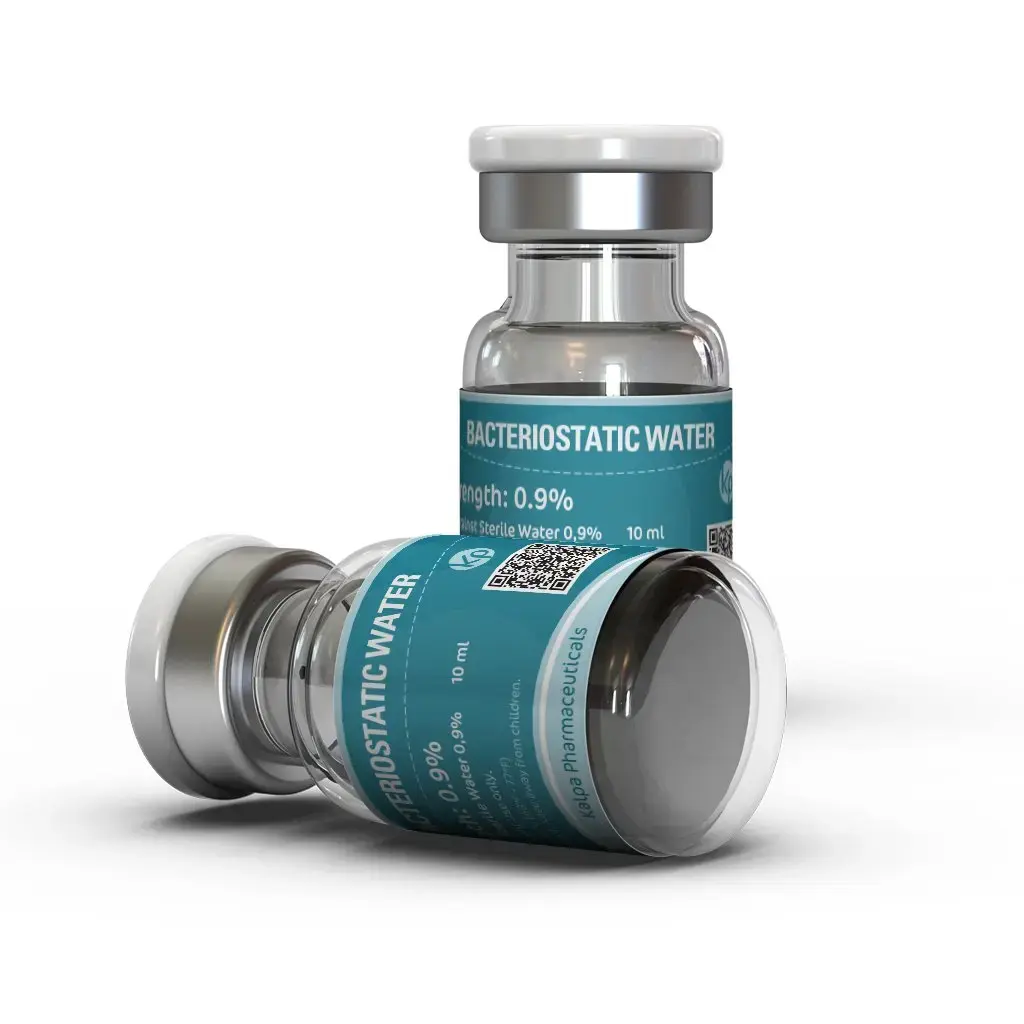
Bacteriostatic Water (Sterile Water 0.9%) – Laboratory Diluent and Reconstitution Medium by Kalpa Pharma Peptide
Introduction and Overview
Bacteriostatic Water is a sterile aqueous solution commonly used in laboratory and pharmaceutical research settings as a diluent and reconstitution medium for a variety of biochemical and analytical applications. It typically contains sterile water with a small concentration of antimicrobial agent to inhibit bacterial growth in multi-use vial systems under controlled laboratory conditions.
In research environments, bacteriostatic water is primarily utilized for peptide reconstitution, solution preparation, and controlled dilution of experimental compounds. It serves as a foundational laboratory reagent in biochemical workflows requiring sterile handling and consistency.
This product is strictly intended for research purposes only and is not approved for human injection, clinical use, or therapeutic application.
Biological and Chemical Relevance
Sterility and Aseptic System Design
Bacteriostatic water is manufactured under controlled aseptic conditions to ensure microbial inhibition and chemical stability. In laboratory contexts, sterility is critical for maintaining integrity in biochemical assays and preventing contamination of experimental samples.
- Microbial growth inhibition mechanisms
- Aseptic formulation standards
- Solution stability under multi-use conditions
- pH buffering and isotonic balancing systems
Solvent Properties in Biochemical Systems
As a solvent, bacteriostatic water is studied for its compatibility with peptides, proteins, and other hydrophilic biomolecules. It provides a controlled aqueous environment for reconstitution without significantly altering molecular structure or activity in vitro.
Key physicochemical properties include:
- High solvation capacity for polar compounds
- Low ionic interference in biochemical assays
- Compatibility with peptide stability studies
Laboratory Handling and Solution Dynamics
Research applications evaluate how sterile aqueous systems influence peptide solubility, aggregation behavior, and molecular stability over time under controlled storage conditions.
Research Applications and Experimental Use
Peptide Reconstitution Models
Bacteriostatic water is frequently used in laboratory workflows involving peptide dissolution and preparation of standardized experimental solutions for in vitro studies.
Analytical Chemistry and Biochemical Assays
It is used as a baseline solvent in chromatography, spectroscopy, and protein interaction assays where solvent purity and consistency are critical.
Solution Stability and Storage Studies
Experimental systems evaluate how peptides and biomolecules behave in aqueous environments over time, including degradation kinetics and structural stability.
Internal and External Research Connections
Bacteriostatic water plays a supporting role across multiple scientific disciplines. In laboratory research supplies, it is categorized as a foundational reagent used in experimental workflows. In regeneration research, sterile solvents are essential for controlled peptide handling studies.
It is also indirectly relevant to metabolic research and endocrine research, where peptide-based compounds require consistent solvent environments for reproducible experimental conditions.
Scientific standards and laboratory protocols can be referenced through NCBI, NIH, and regulatory guidance from the U.S. Food and Drug Administration. Additional global laboratory safety frameworks are provided by the World Health Organization.
Product Information
Compound Details
- Product Title: Bacteriostatic Water
- Active Substance: Sterile Water
- Concentration: 0.9%
- Pack Size: Vial
- Manufacturer: Kalpa Pharma Peptide
Compliance and Disclaimer
Bacteriostatic Water is strictly intended for laboratory and preclinical research purposes only. It is not approved for human injection, medical use, or diagnostic application.
No claims regarding safety, sterility in clinical environments, or physiological effects are made or implied beyond controlled laboratory conditions. All handling must follow institutional biosafety standards and applicable chemical safety regulations for research environments.
Frequently Asked Questions
What is bacteriostatic water used for in research?
It is used as a sterile solvent and diluent for laboratory preparation of biochemical solutions, particularly in peptide and protein research workflows.
Why is bacteriostatic water used instead of plain sterile water?
It contains antimicrobial properties that help inhibit bacterial growth in multi-use laboratory vial systems under controlled conditions.
Can bacteriostatic water affect peptide stability?
In research settings, it is studied for its compatibility with peptides, where factors such as pH and ionic composition may influence stability and solubility.
Which fields use bacteriostatic water in research?
It is commonly used in laboratory research supplies, as well as in metabolic research, endocrine research, and regeneration research.
Where can laboratory standards for sterile solutions be found?
Relevant guidelines and references are available through NCBI, NIH, FDA, and the WHO.
References
PubMed – Sterile Solutions in Laboratory Research
NCBI – Aseptic Technique and Sterile Handling Principles
NCBI – Solution Chemistry in Biological Systems
NIH – Laboratory Methods and Research Standards
FDA – Laboratory and Pharmaceutical Guidance
WHO – Laboratory Biosafety and Chemical Handling Standards
Bacteriostatic Water 0.9% – FAQ
✔️ What is Bacteriostatic Water 0.9%?
Bacteriostatic Water is a sterile water solution containing 0.9% benzyl alcohol, used for dilution and reconstitution of peptides and injectable compounds.
✔️ Why is benzyl alcohol included?
The 0.9% benzyl alcohol acts as a bacteriostatic preservative, helping inhibit bacterial growth after multiple vial punctures.
✔️ What is Bacteriostatic Water used for?
It is commonly used for reconstituting peptides, hormones, and research compounds before subcutaneous or injectable use in research settings.
✔️ How is it different from sterile water?
Unlike sterile water, Bacteriostatic Water contains a preservative, allowing the vial to be used multiple times within a controlled timeframe.
✔️ How should Bacteriostatic Water be stored?
Store at room temperature (20–25°C / 68–77°F) and avoid exposure to heat, sunlight, and contamination.
✔️ How long is it usable after opening?
After first puncture, it is typically used within 28 days, depending on manufacturer guidelines and storage conditions.
✔️ Can Bacteriostatic Water be used for all peptides?
Yes, it is widely used for most lyophilized peptides requiring reconstitution for research purposes.
✔️ Is Bacteriostatic Water sterile?
Yes, it is manufactured under sterile conditions, ensuring suitability for injectable preparation in research environments.
✔️ Can it be used for human injection?
It is intended for prescription and research use only, and must be handled according to medical or laboratory protocols.
✔️ What happens if it becomes contaminated?
Contamination can lead to bacterial growth and reduced sterility, making the solution unsafe for any further use.
✔️ Can it affect peptide stability?
No, it is designed to be a neutral solvent, preserving peptide integrity when properly used and stored.
✔️ Why is it preferred in peptide research?
Because it allows multi-use vial access, extended sterility, and reliable peptide reconstitution performance.
✔️ Where should Bacteriostatic Water be purchased?
Always obtain from verified pharmaceutical or medical suppliers to ensure sterility, quality control, and safety compliance.
✔️ How is it typically used with peptides?
It is added to lyophilized peptide vials using sterile technique to prepare solutions for research injection protocols.
Bacteriostatic Water 0.9% – Storage and Safety
The proper storage and handling of Bacteriostatic Water 0.9% is essential to maintain its sterility, preservative effectiveness, and microbiological safety. As a multi-dose sterile diluent containing a bacteriostatic agent, it plays a critical role in peptide preparation and requires strict hygiene and storage control to prevent contamination and ensure safe usage.
Controlled Storage Conditions
To preserve full integrity, Bacteriostatic Water 0.9% should always be stored at a controlled room temperature between 20°C and 25°C (68°F–77°F). Stable ambient conditions help maintain the effectiveness of the benzyl alcohol preservative system, preventing microbial growth and ensuring safe multi-use functionality.
The vial must remain in its original sealed packaging, protected from direct sunlight, heat exposure, and excessive humidity. Environmental instability can compromise the sterility of the solution over time. Unlike peptides, this solution should not be frozen, as freezing may disrupt container integrity and reduce sterile reliability.
Sterile Handling Guidelines
When using Bacteriostatic Water 0.9%, strict aseptic technique is mandatory to maintain sterility. Only sterile syringes and properly disinfected preparation tools should be used when drawing from the vial or mixing with peptide compounds.
The rubber stopper must be disinfected before every puncture to reduce contamination risk. Needles should never be reused, and contact with non-sterile surfaces must be avoided. Each entry into the vial introduces a minimal risk of contamination, making proper technique essential for safe multi-dose use.
In-Use Stability
Once opened, Bacteriostatic Water 0.9% remains usable for an extended period due to its antimicrobial preservation system, but must still be stored under clean and stable conditions. Maintaining consistent room temperature storage ensures continued effectiveness of the bacteriostatic agent (benzyl alcohol 0.9%).
If any cloudiness, visible particles, or discoloration appear, the solution should be discarded immediately. Proper storage ensures consistent sterility support and safe peptide reconstitution performance.
Safety and Responsibility Notes
Bacteriostatic Water 0.9% should always be stored securely and kept out of reach of children or unauthorized individuals. It is intended strictly for sterile preparation use and must not be injected undiluted unless directed by a qualified professional context.