| Drug Class: |
Copper-binding tripeptide research compound (tissue remodeling and cellular signaling peptide) |
| Molecular Formula: |
C14H24N6O4Cu |
| Molecular Weight: |
~403.9 Da |
| Form: |
Lyophilized peptide for injection (vial) |
| Purity: |
Not specified (typically ≥98% peptide purity for research-grade synthesis) |
| Sequence: |
Gly-His-Lys complexed with Cu²⁺ (Copper Peptide) |
| Brand: |
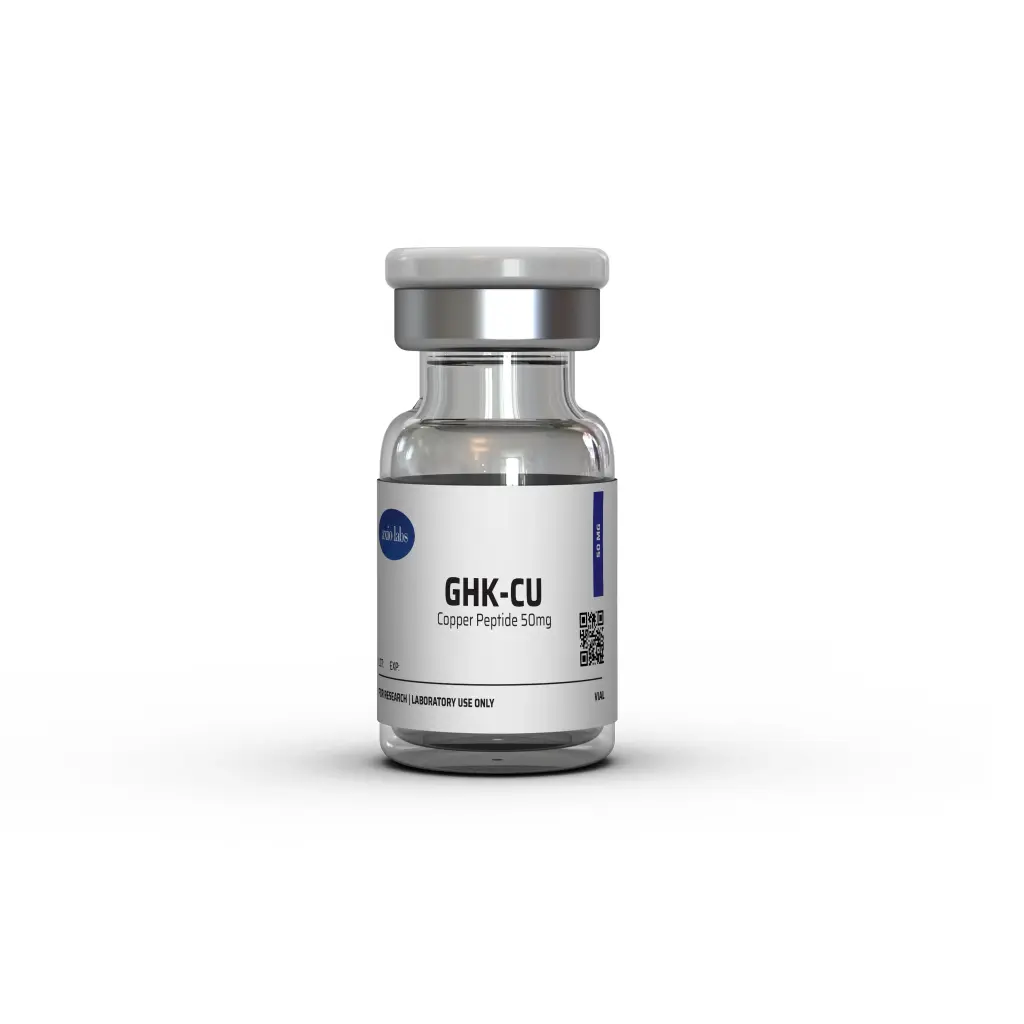
Axiolabs |
| Substances: |
GHK-Cu (Copper Tripeptide-1) |
| Concentration: |
50mg |
Product Disclaimer: Research Purposes Only
This product is intended strictly for laboratory research and in vitro analysis. It is not approved for human or animal use. Any form of internal administration is prohibited by law. Handling should be limited to qualified and licensed professionals. This item is not classified as a pharmaceutical, dietary supplement, or cosmetic product. For educational and scientific research use only.
GHK-Cu 50mg – Copper Peptide Research Compound by Axiolabs
Introduction and Overview
GHK-Cu is a synthetic copper-binding tripeptide complex widely studied in molecular biology, peptide chemistry, and cellular signaling research. The compound consists of the naturally occurring tripeptide glycyl-L-histidyl-L-lysine (GHK) complexed with copper ions, forming a biologically relevant peptide-metal structure examined in laboratory and preclinical environments.
Research involving GHK-Cu focuses on its interaction with cellular communication pathways, extracellular matrix regulation, metalloprotein signaling, and gene expression systems associated with structural biology. Experimental investigations commonly evaluate how peptide-copper complexes influence signaling cascades related to fibroblast activity, protein turnover, and intracellular regulatory networks.
GHK-Cu referenced within this category is strictly intended for research purposes only. It is not approved for human consumption, clinical application, or therapeutic use.
Biological Relevance
Copper Peptide Signaling Mechanisms
GHK-Cu is investigated for its role as a copper transport-associated peptide complex involved in biochemical signaling and cellular communication systems. Copper ions function as cofactors in numerous enzymatic pathways, and peptide-mediated copper transport is studied in relation to intracellular regulation mechanisms.
Laboratory studies commonly analyze pathways involving:
- Matrix metalloproteinase (MMP) signaling – associated with extracellular matrix regulation
- TGF-β pathways – involved in cellular signaling and transcriptional responses
- MAPK/ERK cascades – linked to intracellular communication systems
- Antioxidant-associated signaling networks – related to oxidative stress response pathways
Extracellular Matrix and Structural Biology Research
GHK-Cu is frequently studied in experimental systems focused on extracellular matrix organization and connective tissue signaling dynamics. Researchers investigate interactions involving:
- Collagen-associated molecular signaling
- Fibroblast communication pathways
- Integrin-mediated cellular signaling
- Matrix remodeling mechanisms
These investigations are closely connected to dermatology research and regeneration research.
Gene Expression and Cellular Adaptation
Experimental research involving GHK-Cu frequently examines transcriptional regulation and peptide-mediated gene signaling. Researchers analyze how copper peptide complexes interact with cellular adaptation systems and regulatory protein networks under controlled laboratory conditions.
This area also overlaps with longevity research, particularly studies involving oxidative signaling and cellular maintenance pathways.
Research Applications and Experimental Investigation
Fibroblast and Connective Tissue Models
GHK-Cu is commonly utilized in laboratory models designed to evaluate fibroblast-associated signaling systems and extracellular matrix communication pathways.
Metalloprotein and Enzymatic Signaling Studies
Researchers investigate how copper peptide complexes influence enzymatic pathways involving metalloproteins, antioxidant-associated signaling, and intracellular copper regulation mechanisms.
Signal Transduction and Molecular Pathway Analysis
Experimental systems involving GHK-Cu often focus on kinase activation, transcription factor modulation, and cellular communication pathways associated with peptide-metal interactions.
Internal and External Research Connections
GHK-Cu-related studies intersect with multiple scientific disciplines. In musculoskeletal research, extracellular matrix signaling and connective tissue communication pathways are investigated in relation to structural biology systems. In inflammation research, researchers examine cytokine-associated signaling and oxidative stress pathways linked to cellular communication.
Additional overlap exists with cardiovascular research, where endothelial signaling and nitric oxide-associated pathways are studied, and immune support research, which investigates peptide-mediated immune signaling systems.
Researchers commonly utilize scientific resources such as PubMed, the NCBI database, and institutional publications from the National Institutes of Health for peer-reviewed literature involving peptide chemistry and molecular biology.
Product Information
Compound Details
- Product Title: GHK-Cu
- Active Substance: GHK-Cu
- Concentration: 50mg
- Pack Size: Vial
- Manufacturer: Axiolabs
Compliance and Disclaimer
GHK-Cu is strictly intended for laboratory and preclinical research purposes only. This compound is not approved for human consumption, medical use, or diagnostic application by regulatory authorities including the U.S. Food and Drug Administration.
No claims regarding safety, efficacy, or clinical outcomes are made or implied. Researchers handling peptide compounds should comply with institutional biosafety protocols, ethical laboratory standards, and applicable regulatory requirements.
Frequently Asked Questions
What is GHK-Cu?
GHK-Cu is a copper-binding tripeptide complex studied in laboratory environments for its interaction with extracellular matrix signaling and cellular communication pathways.
Which pathways are commonly investigated with GHK-Cu?
Research frequently focuses on MMP signaling, MAPK/ERK pathways, TGF-β signaling, oxidative stress response systems, and fibroblast-associated communication networks.
Is GHK-Cu approved for human use?
No. GHK-Cu referenced here is strictly for research purposes only and is not approved for therapeutic or clinical applications.
Which scientific disciplines study copper peptides?
Relevant fields include dermatology research, regeneration research, longevity research, and inflammation research.
Where can researchers access scientific literature related to GHK-Cu?
Peer-reviewed information is available through PubMed, NCBI, and publications provided by the NIH.
References
PubMed – GHK-Cu and Copper Peptide Signaling Research
NCBI – Copper Biology and Cellular Regulation
NCBI – Extracellular Matrix and Cellular Signaling
NIH – Molecular Biology and Peptide Research Resources
FDA – Regulatory Guidance for Laboratory Compounds
WHO – Biomedical Laboratory and Research Standards
GHK-Cu (50mg) – FAQ
✔️ What is GHK-Cu (50mg)?
GHK-Cu is a copper-binding tripeptide (glycine-histidine-lysine) widely studied for its role in skin regeneration, collagen production, and tissue repair support.
✔️ How does GHK-Cu work?
It helps activate cellular repair pathways, promoting collagen synthesis, wound healing, and antioxidant protection at the skin and tissue level.
✔️ What are the main research benefits of GHK-Cu?
Commonly studied effects include skin rejuvenation, improved elasticity, reduced fine lines, hair follicle stimulation, and faster healing response.
✔️ Why is copper important in GHK-Cu?
The copper ion plays a key role in enzyme activation, supporting skin repair, antioxidant defense, and connective tissue health.
✔️ How should GHK-Cu be stored?
Store the GHK-Cu (50mg) vial in a refrigerator at 2–8°C (36–46°F) and protect it from heat, light, and moisture to maintain peptide stability.
✔️ What happens after reconstitution?
After mixing with sterile bacteriostatic water, it should be refrigerated and used within the recommended usage period to preserve potency and effectiveness.
✔️ Is GHK-Cu used for skin care research?
Yes, it is widely studied in cosmetic and dermatological research for its potential role in anti-aging and skin repair mechanisms.
✔️ Can GHK-Cu support hair growth?
Research suggests it may stimulate hair follicle activity, improve scalp health, and support stronger hair regeneration cycles.
✔️ Is GHK-Cu safe?
GHK-Cu is considered a research peptide, generally well-tolerated in studies, but should be used in a controlled and responsible research setting.
✔️ Are there side effects of GHK-Cu?
Possible mild effects may include temporary redness, irritation at application site, or mild sensitivity reactions.
✔️ How is GHK-Cu typically used?
It is commonly studied via subcutaneous injection or topical application, depending on research goals and formulation.
✔️ Where can I buy authentic GHK-Cu (50mg)?
Always purchase from trusted suppliers such as verified peptide vendors or reputable research chemical distributors to ensure purity, safety, and authenticity.
GHK-Cu – Storage & Safety Guidelines
Maintain Copper Peptide Bioactivity
To preserve the full regenerative and skin-repair potential of GHK-Cu (Copper Peptide), store the vial in a cool, dry, and light-protected environment, away from heat, humidity, and direct sunlight exposure. Before reconstitution, stable room-temperature storage is acceptable. Once prepared, the solution must be kept refrigerated at 2–8°C (36–46°F) to maintain peptide stability, copper-binding integrity, and biological performance. Avoid repeated freeze–thaw cycles, as they can degrade molecular structure and functional activity.
Safe Handling & Preparation Protocols
Always handle GHK-Cu peptide using sterile syringes, alcohol swabs, and disposable gloves to prevent microbial contamination. Do not use the solution if it appears cloudy, oxidized, or contains visible particles. Follow established usage guidelines and consult a qualified professional when needed. Keep the vial securely stored away from children and pets, and dispose of any unused material using proper medical safety procedures.
Best Practices for Stability & Longevity
- Always check the expiration date before use to ensure product safety and reliability.
- Store in the original vial and packaging to reduce exposure to light-induced degradation and oxidation.
- Handle gently—avoid shaking to preserve peptide structure and copper ion stability.
Why Proper Storage Matters
Correct storage and safety practices ensure that GHK-Cu maintains its full skin-repair, collagen-support, and tissue-regeneration activity. Following these guidelines helps preserve compound stability, dosing accuracy, and user safety, ensuring consistent performance from every vial of this advanced copper-binding peptide complex.